
What Are Drones Used For? 11 Real Uses From Delivery to Rescue
Drones started as military aircraft, then became a hobby, and are now ordinary working tools. Today they deliver groceries and blood, inspect power lines, spray crops, film movies, count wildlife and reach 911 calls before police cars do. Most of these jobs used to need a helicopter, a crewed plane, scaffolding or a person in a dangerous place.
This guide explains what drones are used for across every major sector, with real programmes and verified figures, so you can see where the technology actually stands rather than where press releases say it will be.
Quick answer: Drones are used for photography and filmmaking, recreation, mapping and surveying, inspecting infrastructure, crop spraying and monitoring, package and medical delivery, police and fire response, search and rescue, scientific research, wildlife conservation, humanitarian aid, light shows and military operations. Their value is the same in every case: they put a camera or sensor in the air quickly, cheaply and without risking a crewed aircraft or a worker.
What drones do: the short version
Almost every drone job comes down to one of three things. A drone can see (carry a camera, thermal imager, multispectral sensor or lidar), carry (deliver a package or spray a liquid), or perform (fly in formation for a light show or act as a target or weapon). The payload decides the job far more than the airframe does.
The scale is now large. The FAA reports about 840,000 registered drones in the United States and close to 482,000 certificated commercial remote pilots, according to its late-2025 figures. If you are new to the basics, our guide to what drones, quadcopters and UAVs are covers the terms used below.
| Industry | Example uses | Typical payload | Real-world example |
|---|---|---|---|
| Consumer and hobby | Travel photos, vlogging, FPV racing | 4K camera, FPV camera | DJI Mini 5 Pro, Neo 2, Avata 360 |
| Film and media | Aerial cinematography, live sport, news | Cinema camera on gimbal, FPV rig | DJI Inspire 3, custom cinewhoops |
| Delivery | Groceries, takeaway, parcels | Winch or tether package drop | Wing and Zipline for Walmart, Amazon MK30 |
| Healthcare | Blood, medicines, lab samples | Insulated box or parachute drop | Zipline in Africa and the US, Matternet for the NHS |
| Public safety | Drone as first responder, search and rescue, fire scene overview | Zoom and thermal camera, spotlight, speaker | Chula Vista Police, Skydio X10, DJI Matrice 4T |
| Agriculture | Spraying, seeding, crop health mapping | Spray tank, multispectral sensor | DJI Agras, XAG spray drones |
| Inspection | Power lines, wind turbines, bridges, roofs, solar farms | Zoom, thermal and lidar sensors | DJI Matrice 400, docked drones |
| Mapping and surveying | Topographic surveys, stockpile volumes, construction progress | Mapping camera, lidar | Photogrammetry and lidar workflows |
| Science and conservation | Wildlife counts, whale research, hurricane data | Thermal camera, sample dishes, weather sensors | Ocean Alliance SnotBot, NOAA hurricane drones |
| Entertainment | Light shows, advertising | LED lights, swarm software | 33,615-drone record show in China (2026) |
| Military and security | Reconnaissance, strike, counter-drone | EO/IR cameras, munitions | Ukraine’s front-line FPV drones |
Consumer drones and filmmaking
Most drones in the world are still consumer camera drones. People use them for travel photos, holiday video, property shots, vlogging and simply for fun. Small folding drones under 250 g, such as the DJI Mini 4 Pro and Mini 5 Pro, are popular because they face lighter rules in many countries. Self-flying selfie drones like the DJI Neo 2 and follow-me modes on larger models let one person film themselves cycling, skiing or hiking.
In film and TV, drones have largely replaced helicopters for establishing shots and chase scenes. Heavy-lift drones carry full cinema cameras, while small FPV drones fly through buildings, along racing cars and over athletes in ways no crewed aircraft could. News crews and sports broadcasters use drones for live aerial views at a fraction of the cost of a helicopter.
One buying note for US readers: in December 2025 the FCC added DJI and other foreign drone makers to its Covered List, which blocks new models from FCC authorisation. Drones authorised before then can still be sold and flown.
Delivery and medical transport
Drone delivery is no longer a trial-only idea. Walmart passed 1 million drone deliveries in May 2026, now flown by its partners Wing and Zipline, with an average order-to-drop time of about 23 minutes. In November 2026 Walmart and Zipline agreed to add 300 more drone delivery sites, and Wing is expanding to more than 270 Walmart stores by 2027. Amazon flies its MK30 drone in more than 10 US metro areas and began a trial in Darlington, England, in May 2026.
Healthcare was the first use that worked at scale. Zipline began flying blood to hospitals in Rwanda in 2016 and says it has now completed more than 2.5 million deliveries worldwide. In the US and UK, hospital networks fly lab samples and medicines between sites instead of using couriers stuck in traffic. Our full guide to delivery drones covers each operator, the regulations and the costs.
Public safety: police, fire and search and rescue
The fastest-growing public sector use is drone as first responder (DFR). A drone launches from a rooftop or dock when a 911 call comes in and streams live video to dispatchers and officers before they arrive. The Chula Vista Police Department in California pioneered the model and has now flown more than 25,000 DFR missions. The FAA approved DFR waivers for more than 1,000 public safety agencies between April 2025 and February 2026, more than it had granted in the previous seven years.
Fire services use drones to see the shape and spread of a fire, find hotspots through smoke and check roofs before crews go in. Search and rescue teams use thermal drones to find missing walkers at night, and police use them to document crash scenes in minutes rather than hours. DFR programmes also raise privacy questions, and civil liberties groups have pushed for clear policies on recording and data retention.
Agriculture
Farming is one of the biggest commercial uses. Spray drones apply fertiliser, fungicide and seed, especially on small, wet or hilly fields where ground rigs struggle. The American Farm Bureau Federation reports that drones treated about 16.4 million acres of US farmland in 2025, up from 10.3 million in 2024 and 3.7 million in 2023. China has used spray drones at far larger scale for years.
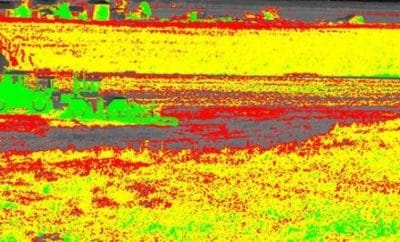
Drones with multispectral sensors map crop health, so farmers can spot stress, disease or poor drainage early and apply inputs only where needed. Livestock farmers use drones to check stock, fences and water troughs across large properties.
Inspection, mapping and construction
Inspection is where drones save the most money and the most risk. Instead of sending climbers up wind turbines, rope teams under bridges or crews along power lines, operators fly a drone with a zoom or thermal camera. Thermal cameras find faulty solar panels and overheating electrical joints. Gas companies use drones with methane sensors to find leaks. Docked drones that launch automatically on a schedule now patrol substations, mines and large industrial sites.
Mapping is the other core commercial job. A drone flies a grid pattern, takes hundreds of overlapping photos and software stitches them into accurate maps and 3D models. Surveyors, quarries, construction firms and insurers use this for topographic surveys, stockpile volumes, progress reports and damage claims. Our guide to photogrammetry and lidar mapping explains how the two methods differ.
Science, conservation and humanitarian work
- Wildlife protection: rangers fly thermal drones at night to find poachers and track elephants and rhinos. In Kenya’s Amboseli National Park, thermal drones guided elephants out of farmland in 33 incidents in May and June 2026 alone. See our guide to anti-poaching drones.
- Marine research: Ocean Alliance’s SnotBot drones fly through whale spray to collect DNA, hormones and bacteria without touching the animal.
- Wildlife counts: drone surveys at Raine Island on the Great Barrier Reef showed earlier boat-based counts had underestimated nesting green turtles by a factor of about 1.7.
- Weather: NOAA launches small drones from its Hurricane Hunter aircraft to collect data in the lowest, most dangerous layers of a storm.
- Humanitarian aid: drones map flood and earthquake damage, find survivors and carry medicines to communities cut off by washed-out roads.
Light shows and military use
Drone light shows now replace fireworks at many city celebrations and product launches. Hundreds or thousands of small drones with LEDs fly pre-programmed paths to draw shapes in the sky. The scale keeps growing: a show in Sichuan, China, flew 33,615 drones at once in May 2026 to set a Guinness World Record. Records like this are broken regularly, so treat any figure as a snapshot.
Military use is where drones began, and the war in Ukraine has changed it again. Cheap FPV drones built from hobby parts now carry out reconnaissance and strikes along the front line. Ukrainian officials say the armed forces received about 3 million FPV drones in 2025. Large fixed-wing military drones such as the MQ-9 Reaper still fly long surveillance missions, and counter-drone systems have become a major industry of their own.
FAQs
What are drones mostly used for?
By number of aircraft, recreational photography and video is still the biggest use. By commercial value, the largest uses are inspection, mapping and surveying, agriculture and, increasingly, public safety and delivery.
What are drones used for in everyday life?
For most people, drones show up as aerial video in films, sport and property listings, as light shows at events, and in some US cities as a way to get groceries or takeaway delivered in under 30 minutes. They also work in the background, inspecting the power lines, bridges and phone masts people rely on.
Can drones save lives?
Yes. Thermal drones find missing people at night, delivery drones carry blood and medicines to remote clinics, and first-responder drones give police and paramedics a view of an emergency before they arrive. Drones also keep workers off towers, roofs and cliff faces.
Do you need a licence to use a drone for work?
In the US, commercial flights need an FAA Part 107 remote pilot certificate and a registered drone. In the EU and UK, the requirements depend on the drone’s weight and class and how close you fly to people. Specialist work such as crop spraying or flights beyond visual line of sight needs extra approvals.