
What Is an FPV Camera? Analog vs Digital FPV Cameras Explained
An FPV (first-person view) camera is the small, low-latency camera on the front of a drone that sends live video to your goggles or screen, so you see exactly what the drone sees as you fly. It is a different job from a recording camera. An FPV camera must react instantly to changing light, show detail in shadows and highlights, and add as little delay as possible. This guide explains FPV camera technology, analog versus digital systems, the specs that matter and how FPV cameras are used.
Quick answer: An FPV camera captures the live view a pilot uses to fly, and a video transmitter (VTX) sends it to goggles in real time. In 2026 most new pilots choose a digital system, such as DJI O4, Walksnail Avatar or HDZero, for HD video with roughly 15 to 35 ms of delay. Analog cameras remain the cheapest option and degrade gradually at long range. Key specs are latency, sensor size, dynamic range (WDR), field of view and low-light performance.
What an FPV camera does
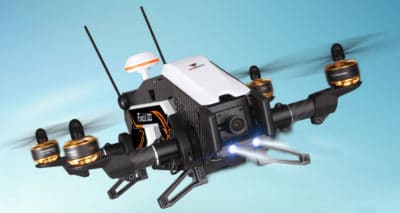
In an FPV system, the camera captures video and passes it to the video transmitter. The transmitter broadcasts it, usually on 5.8 GHz, to a receiver in your goggles or monitor. On camera drones such as DJI’s Mini and Air series, the main gimbal camera doubles as the FPV feed to your phone or screen. On FPV racing and freestyle quads, a dedicated FPV camera faces forward, often tilted up 20 to 40 degrees so the view stays level when the drone tilts forward at speed. Many freestyle pilots also carry an action camera such as a GoPro or DJI Osmo Action for high-quality recordings.
Analog vs digital FPV cameras
| System | Live image | Typical latency | Strengths | Trade-offs |
|---|---|---|---|---|
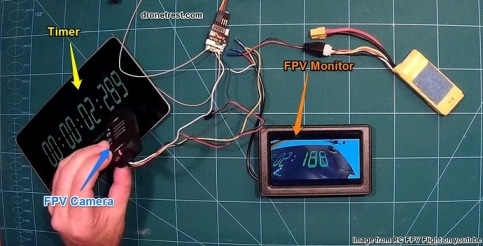
| Analog | Standard definition (~720 × 576) | ~10–20 ms | Cheapest, light, gradual signal fade, huge choice | Low image quality, interference noise |
| DJI O4 / O4 Pro | Up to 1080p live, 4K recording on O4 Pro | ~20–35 ms | Best image quality, long range, large sensor on O4 Pro | Most expensive, DJI goggles only |
| Walksnail Avatar | Up to 1080p | ~20–45 ms | Good value HD, light versions for small quads | Latency varies with mode |
| HDZero | 720p60 or 540p90 | ~10–20 ms, fixed | Analog-like low latency for racing | Softer image in detailed scenes |
| OpenIPC | Up to 1080p | ~15–25 ms | Open-source and cheap hardware | Needs technical setup |
For goggles that pair with each system, see our guide to the best FPV drone goggles.
FPV camera specs explained
- Latency: the delay between something happening and you seeing it. Under about 30 ms feels instant for freestyle. Racers chase the lowest possible figure.
- Image sensor: early FPV cameras used CCD sensors for their fast response. Today almost all use CMOS, which has caught up on latency and handles light far better. Bigger sensors, such as the 1/1.3-inch sensor in DJI’s O4 Pro, give cleaner low-light images.
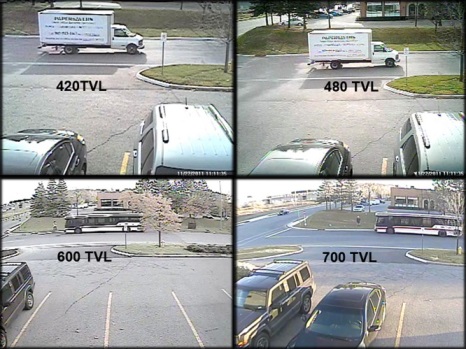
- Resolution and TVL: analog cameras are rated in TVL (TV lines), typically 1,000 to 1,200, though the analog signal limits real detail. Digital cameras are rated in pixels: 720p, 1080p and 4K recording.
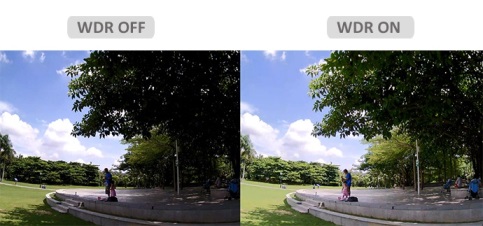
- Dynamic range (WDR): wide dynamic range keeps detail when you fly from bright sky into dark trees, so you are not momentarily blinded.
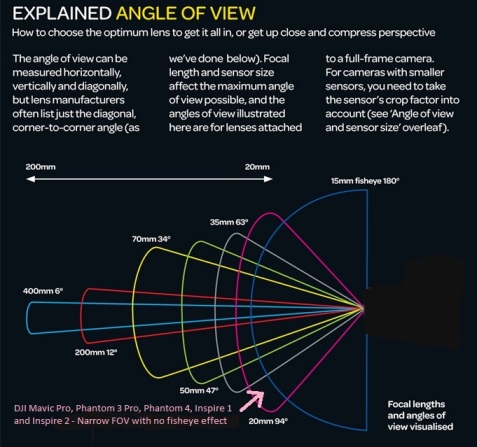
- Field of view: 150 to 170 degrees is typical. A wider view helps you judge gaps. A narrower view looks faster and less distorted.
- Aspect ratio: 4:3 gives a taller view, which is useful for seeing the ground and props. 16:9 matches HD goggles and video.
- Low-light (“starlight”) sensitivity: special sensors and fast lenses let you fly at dusk. True night FPV still needs lights or a thermal camera.
- Size and weight: FPV cameras come in nano (14 mm), micro (19 mm) and full (22 mm) sizes to suit everything from tiny whoops to 7-inch quads.
How FPV video reaches your goggles
The camera’s output goes to the video transmitter, whose power (25 mW to 1 W or more, subject to local law) and antenna determine range. Digital systems compress the video and send it with error correction, giving a clear picture until the signal suddenly drops out. Analog fades gradually into static, which some long-range pilots prefer. Our guide to FPV video range and antennas explains how to get a clean signal further, and our guide to FPV transmitters and receivers covers the hardware.
Best uses for FPV cameras
- Racing: pilots weave through gates at over 100 km/h, where the lowest latency matters most.
- Freestyle and cinematic flying: acrobatic flips, dives and proximity flying through buildings and down cliffs, recorded on an action camera or onboard 4K.
- Cinewhoops: ducted drones that fly indoor tours and smooth one-take shots through homes, venues and factories.
- Long-range exploration: mountain surfing and coastline flights, often with GPS rescue and high-gain antennas.
- Inspection: small FPV drones get inside tanks, ducts, tunnels and roof voids where larger drones cannot.
- Search and rescue and defence: FPV and thermal cameras give responders a fast, close-up view.
New to flying FPV? Start with our guide to FPV flying and equipment, and practise on a simulator before your first flight.
FPV camera FAQs
Is digital FPV better than analog?
For image quality, yes. Digital systems show HD video that makes it easier to spot gaps and obstacles. Analog is cheaper, lighter, has the lowest latency and fades gradually at range, so it is still popular for racing and budget builds.
What is a good FPV camera latency?
Below about 30 ms feels responsive for most pilots. Competitive racers aim for 20 ms or less, with analog or HDZero.
What does TVL mean on an FPV camera?
TV lines measure the horizontal resolution of an analog camera. Higher numbers suggest sharper images, but the analog video signal limits the visible detail to standard definition.
Can I record HD video with an FPV camera?
Digital systems record onboard, up to 4K on the DJI O4 Pro. Analog FPV cameras are usually paired with a separate action camera for HD recording.