
Best 4K Camera Drones for Aerial Filming in 2026
Almost every camera drone now records 4K video, so the label alone tells you little. What separates a $300 drone from a $2,700 one is the sensor behind the lens, how much data it records each second, and whether it can shoot 10-bit log footage that holds up when you colour grade. This guide compares the best 4K camera drones you can buy in late 2026 and explains which video specs actually show up in your footage.
Prices below are approximate US prices for the base kit. Buying a DJI drone in the US is more complicated than it was, so we note where that affects your choice.
Quick answer: The best 4K drone for most people is the DJI Mini 4 Pro (about $759): under 250 g, 4K/60 HDR, 10-bit D-Log M and omnidirectional obstacle sensing. For better low light, the 1-inch Mini 5 Pro or Air 3S is the step up. Professionals should look at the Mavic 4 Pro. On a tight budget, the DJI Mini 4K (about $299) is the cheapest gimbal-stabilised 4K drone worth buying.
Best 4K camera drones compared
The table lists the main camera specs side by side. All of these drones use a 3-axis mechanical gimbal, apart from the Avata 360, which stabilises its 360-degree footage electronically.
| Drone | Price (about) | Main sensor | Top video modes | 10-bit log | Max bitrate | Weight |
|---|---|---|---|---|---|---|
| DJI Mini 4K | $299 | 1/2.3-inch, 12 MP | 4K/30 | No | 100 Mbps | 246 g |
| Potensic Atom 2 | $330 | 1/2-inch, 48 MP | 4K/30 | No | 80 Mbps | 249 g |
| DJI Mini 4 Pro | $759 | 1/1.3-inch, 48 MP | 4K/60 HDR, 4K/100 | D-Log M, HLG | 150 Mbps | <249 g |
| DJI Mini 5 Pro | $769 | 1-inch, 50 MP | 4K/60 HDR, 4K/120 | D-Log M, HLG | 130 Mbps | 249.9 g |
| DJI Air 3S | $1,099 | 1-inch, 50 MP plus 70 mm tele | 4K/60 HDR, 4K/120 | D-Log M, HLG | 130 Mbps | 724 g |
| DJI Mavic 4 Pro | $2,700 | 4/3-inch, 100 MP plus two tele cameras | 6K/60 HDR, 4K/120 | D-Log, D-Log M, HLG | 180 Mbps (1,200 Mbps ALL-I on Creator Combo) | About 1,063 g |
| DJI Avata 360 | $719 | Two 1/1.1-inch, 64 MP | 8K/60 360-degree, 4K/60 single lens | D-Log M | 180 Mbps | About 455 g |
| Autel EVO II Pro V3 | $2,099 | 1-inch, 20 MP, f/2.8 to f/11 | 6K/30 | A-Log | 120 Mbps | Over 1 kg |
| Autel EVO Lite+ | Discontinued | 1-inch, 20 MP, f/2.8 to f/11 | 6K/30 | Log | 120 Mbps | About 835 g |

The best 4K drones reviewed
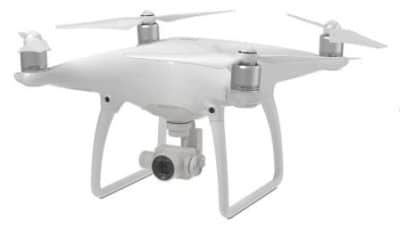
DJI Mini 4 Pro: best 4K drone for most people
The Mini 4 Pro pairs a 1/1.3-inch, 48 MP sensor with a bright f/1.7 lens. It shoots 4K at up to 60 fps with HDR, 4K/100 for slow motion, and 10-bit D-Log M or HLG at up to 150 Mbps. The gimbal rotates for true vertical video, and omnidirectional vision sensing with ActiveTrack makes it safe to fly close to trees and people.
Because it weighs under 250 g, it avoids some of the rules that apply to heavier drones in many countries. Flight time is about 34 minutes on the standard battery.
DJI Mini 5 Pro: best image quality under 250 g
The Mini 5 Pro is the first Mini with a 1-inch sensor. Larger pixels give cleaner footage at dusk and more dynamic range than the Mini 4 Pro. It adds 4K/120 slow motion, a forward LiDAR for better obstacle detection in low light, and a gimbal that rotates further for creative angles. DJI quotes about 36 minutes of flight.
DJI does not sell it through its own US store, so US buyers have to go through third-party resellers, often with fewer bundle options.
DJI Air 3S: best all-rounder
The Air 3S has two cameras: a 1-inch, 24 mm wide camera at f/1.8 and a 1/1.3-inch, 70 mm medium telephoto. Both shoot 4K at up to 120 fps in 10-bit D-Log M or HLG. The telephoto compresses perspective, which suits city skylines, mountains and shots that track people from a distance.
At 724 g it handles wind better than the Minis and flies for up to 45 minutes, but it needs registration and more paperwork in most places.
DJI Mavic 4 Pro: best for professional filming
The Mavic 4 Pro carries a 100 MP Hasselblad camera on a 4/3-inch sensor with a variable f/2.0 to f/11 aperture, plus 70 mm and 168 mm telephoto cameras. It records 6K/60 HDR, 4K/120, and 10-bit D-Log, D-Log M and HLG, with DJI quoting up to 16 stops of dynamic range. The 512 GB Creator Combo adds H.264 ALL-I 4:2:2 recording at up to 1,200 Mbps for heavy grading.
Flight time is up to 51 minutes. It is not sold on DJI’s US website, so US prices from resellers sit around $2,700 for the standard kit.
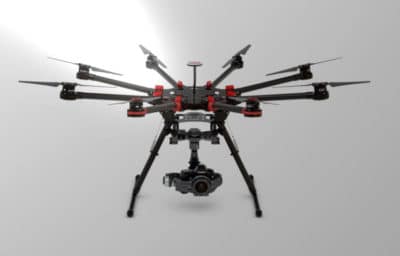
DJI Avata 360: best for 360-degree and FPV footage
The Avata 360 is a ducted FPV drone with two 1/1.1-inch sensors that record 8K/60 360-degree video. You choose the framing later in editing, so you never miss the shot. A single-lens mode records conventional 4K/60. It launched in March 2026 and is not sold through DJI’s US websites, although US retailers carry it.
DJI Mini 4K and Potensic Atom 2: best budget 4K drones
The Mini 4K is the cheapest DJI drone with a 3-axis gimbal and 4K/30 video. It records 8-bit H.264 at 100 Mbps with no log profile or obstacle sensing, but footage is sharp and stable in good light. The Potensic Atom 2 is the strongest non-DJI option at this price. It has a 1/2-inch sensor, 4K/30 at 80 Mbps, a 3-axis gimbal and AI subject tracking, but no obstacle avoidance. For more choices, see our guide to the best budget drones.
Autel EVO II Pro V3 and EVO Lite+: where Autel stands
Autel ended sales of the EVO Lite+ and EVO Nano in July 2025 and will support them until July 2030. Only leftover stock remains. The EVO II Pro V3 is Autel’s last consumer camera drone. It has a 1-inch, 20 MP sensor with an adjustable f/2.8 to f/11 aperture, 6K video, 10-bit A-Log and about 40 minutes of flight, and Autel lists it at about $2,099. It suits buyers who want a 1-inch, variable-aperture camera without DJI’s software ecosystem.
Which 4K drone to buy for your budget
- Under $350: DJI Mini 4K for the simplest, most reliable 4K drone. Choose the Potensic Atom 2 if you prefer not to buy DJI.
- Around $750 to $800: DJI Mini 4 Pro for the best value, or the Mini 5 Pro if you shoot at dawn and dusk and can buy it from a reseller.
- Around $1,100: DJI Air 3S for two cameras, longer flights and better wind handling.
- Around $700 for something different: DJI Avata 360 for 360-degree FPV footage you reframe later.
- $2,000 and up: DJI Mavic 4 Pro for professional work, or the Autel EVO II Pro V3 as a non-DJI option.
If you also shoot stills or survey work, our guide to the best drones for aerial photography and mapping covers that side.

4K video specs that actually matter
Sensor size
Sensor size has the biggest effect on image quality. A larger sensor collects more light, so it shows less noise in shadows and at sunset and holds more detail in bright skies. In rough order, the sizes run from 1/2.3-inch (Mini 4K) through 1/2-inch, 1/1.3-inch and 1-inch to 4/3-inch (Mavic 4 Pro). A 4K drone with a small sensor can look as good as an expensive one at noon, but the difference shows quickly in low light.
Bitrate and codec
Bitrate is how much data the camera records each second. Higher bitrates keep fine detail such as leaves, waves and gravel, which low bitrates turn into blocky smudges. H.265 stores roughly the same quality in less space than H.264, so 130 Mbps of H.265 can look as good as a higher H.264 figure. Intra-frame codecs such as ALL-I use much more data but are easier to edit and grade.
10-bit colour and log profiles
8-bit video stores 256 shades per colour channel. 10-bit stores 1,024, which prevents banding in skies and gives you room to adjust colour later. Log profiles such as D-Log M and A-Log record a flat, low-contrast image that keeps detail in highlights and shadows. They need colour grading, so only use them if you plan to edit. If you don’t, the Normal profile gives finished-looking footage straight out of the camera.
Frame rates
24 or 25 fps gives a cinematic look, and 30 fps suits general use. 60 fps keeps fast motion smooth. 100 or 120 fps lets you slow footage to quarter speed for dramatic slow motion. Check that a drone offers high frame rates at full 4K, since some only do so at lower resolutions.
HDR and dynamic range
Aerial scenes often include a bright sky and dark ground in the same frame. HDR video modes and HLG keep more of that range without grading, and HLG plays back correctly on modern HDR TVs and phones. A drone’s quoted stops of dynamic range are a useful guide, though manufacturers measure them in different ways.
Is 4K still enough, or do you need 6K or 8K?
4K at 3840 × 2160 has four times the pixels of 1080p, and it is still the standard delivery format for YouTube, streaming and most client work. Shooting 6K, as the Mavic 4 Pro and Autel EVO II Pro V3 can, gives you room to crop, stabilise or reframe while still delivering a sharp 4K file. The Avata 360 needs 8K because its resolution is spread across a full sphere, and a reframed shot ends up closer to HD or 4K detail.
For most buyers, a 1-inch sensor shooting 10-bit 4K will produce better footage than a small sensor shooting at a higher resolution. Good technique matters too. Our drone video tips and guide to ND filters explain how to get a natural motion blur and smooth camera moves.
Buying a DJI 4K drone in the US in 2026
In December 2025 the FCC added DJI and other foreign drone makers to its Covered List. This blocks FCC authorisation of new models, but drones authorised before then can still be sold and flown. All the drones in this guide fall into that group. Several of them, including the Mini 5 Pro, Mavic 4 Pro and Avata 360, are not sold through DJI’s own US store, so buy from established US retailers and check the warranty terms. Our page on upcoming DJI drones and the US ban tracks the latest changes.
FAQs
What is the cheapest good 4K drone?
The DJI Mini 4K at about $299 is the cheapest 4K drone with a 3-axis gimbal, GPS and reliable return-to-home that we recommend. Cheaper drones that claim 4K usually lack a mechanical gimbal, so their footage is shaky or upscaled.
Is a 1-inch sensor worth the extra cost?
Yes, if you film at sunrise, sunset or in shade. A 1-inch sensor, as on the Mini 5 Pro and Air 3S, gives cleaner shadows and more highlight detail than a 1/1.3-inch sensor. In bright midday light the gap is much smaller.
Do I need to shoot in D-Log M?
Only if you will colour grade your footage. D-Log M keeps more dynamic range, but it looks flat until you edit it. If you post clips straight from your phone, use Normal or HLG.
Do I need a licence to fly a 4K drone?
In the US, drones over 250 g must be registered with the FAA, and recreational pilots need the free TRUST certificate. Any commercial work needs a Part 107 certificate whatever the drone weighs. In the UK and EU, most camera drones need an operator ID and an online test, so check your local rules before flying.